Affiliate Disclosure: This post contains affiliate links. If you make a purchase through these links, we may earn a small commission at no extra cost to you. We only recommend brands and products we genuinely believe in.
Before Warby Parker came along, buying a pair of glasses often meant choosing between paying hundreds of dollars at an optical shop or settling for whatever generic frames your budget could stretch to. Warby Parker rewrote that entire experience, and more than a decade later it’s still one of the most recognizable names in eyewear. Here’s a full breakdown of what makes Warby Parker different, how it’s evolved, and whether it’s still worth buying your next pair from.
What Is Warby Parker?
Warby Parker is an American eyewear brand and retailer based in New York City, founded in 2010 by Neil Blumenthal, Dave Gilboa, Andrew Hunt, and Jeffrey Raider while the four were students at the University of Pennsylvania’s Wharton School. The company was built around a simple observation: the eyewear industry had long been dominated by a small number of players able to keep prices artificially high, leaving customers with few affordable options. Warby Parker set out to change that by designing its own frames in-house, cutting out traditional retail markups, and selling directly to customers both online and, eventually, through its own stores.
The brand’s now-famous name comes from two characters in Jack Kerouac’s journals, reflecting the founders’ literary, approachable brand aesthetic from day one. What started as an online-only retailer with $120,000 in combined founder savings has since grown into a public company with hundreds of physical stores across the US and Canada, alongside its original e-commerce roots.
What Makes Warby Parker Different?
- Direct-to-consumer model — by designing and selling its own eyewear rather than relying on traditional optical retail markups, Warby Parker offers designer-style frames at meaningfully lower prices than legacy eyewear brands
- Vertically integrated design and manufacturing — the brand controls more of its own supply chain than most eyewear competitors, helping keep costs down for customers
- Buy a Pair, Give a Pair program — for every pair of glasses purchased, Warby Parker contributes to distributing a pair to someone in need through its nonprofit partners, extending co-founder Neil Blumenthal’s earlier work with the eyewear nonprofit VisionSpring
- In-store and online eye exams — the brand has expanded well beyond just selling frames, offering full eye exams at many of its physical locations
- Distinctive, neighborhood-specific store design — physical Warby Parker locations are known for individualized aesthetics rather than a single cookie-cutter store format
Warby Parker Product Categories
Prescription Glasses
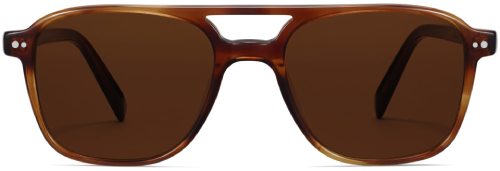
The brand’s core category, offering a wide range of frame shapes and materials, with prescription lenses included starting around $95 for eligible frames — a price point that undercuts much of the traditional optical retail market.
Sunglasses
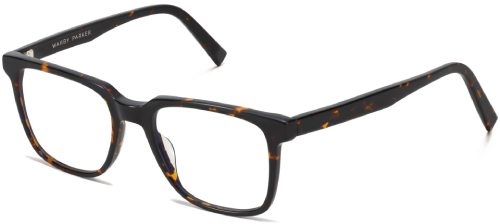
Both prescription and non-prescription sunglasses, designed with the same in-house style sensibility as the brand’s optical frames.
Contact Lenses
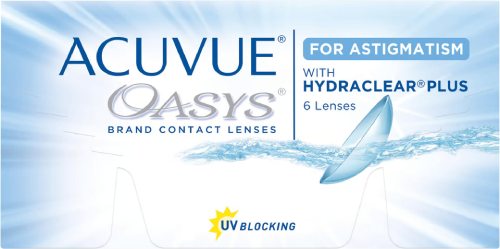
A growing contact lens category, allowing existing prescription customers to manage more of their vision care needs through the same brand.
Progressive & Specialty Lenses
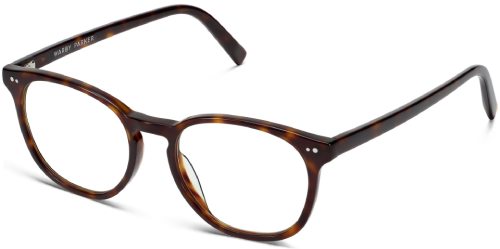
Options for customers with more complex prescription needs, including progressive lenses, expanding the brand’s offering well beyond simple single-vision glasses.
Eye Exams
In-person eye exams available at many Warby Parker retail locations, positioning the brand as a more complete vision care provider rather than just a glasses retailer.
Accessories
Cases, cleaning cloths, and other eyewear accessories rounding out the shopping experience.
Does Warby Parker Still Offer Home Try-On?
For years, one of Warby Parker’s signature features was its Home Try-On program, which let customers select five frames online, receive them by mail, and try them on at home for five days before purchasing, free of charge. That program was a major driver of the brand’s early word-of-mouth growth by removing the guesswork of buying glasses without trying them on in person. As of the end of 2025, Warby Parker ended the traditional Home Try-On mail program, so customers should check the current options on the Warby Parker website, which may include virtual try-on tools or in-store try-on at one of the brand’s growing number of physical locations.
Is Warby Parker Good Quality?
Warby Parker has built a strong, long-standing reputation for offering designer-quality eyewear at a fraction of traditional retail pricing, backed by more than a decade of operating history and a large, established customer base. The brand’s decision to design and manufacture its own frames rather than license designs from third parties has generally translated into consistent quality control across its lineup. While Warby Parker isn’t the absolute lowest-cost option in the eyewear market, it’s widely regarded as offering a strong balance of style, quality, and convenience, including features like virtual try-on tools, compared to ultra-budget competitors.
How Does Warby Parker Compare to Other Eyewear Brands?
| Feature | Warby Parker | Typical Traditional Optical Retailer |
|---|---|---|
| Founded | 2010, New York City | Varies |
| Pricing model | Direct-to-consumer, in-house design | Multiple markups through licensing and distribution |
| Starting price | Around $95 including prescription lenses | Often $200+ |
| Physical stores | 300+ locations across US and Canada | Varies |
| Social mission | Buy a Pair, Give a Pair program | Varies |
| Eye exams | Offered at many store locations | Varies |
Tips for Buying Warby Parker Glasses
- Use the virtual try-on tool on the website to preview frames on your own face before ordering
- Visit a physical store if one is near you for a hands-on fitting and in-person eye exam
- Check your current prescription details before ordering online to make sure lenses are accurate
- Compare frame materials since acetate and metal frames can differ in weight, durability, and price
- Look into progressive or specialty lens options if your prescription needs go beyond standard single-vision lenses
Final Verdict: Is Warby Parker Still Worth It?
More than a decade after disrupting the eyewear industry, Warby Parker remains one of the most trusted names in affordable, stylish glasses. With a direct-to-consumer model that keeps prices accessible, a growing network of physical stores offering in-person exams and fittings, and a continued commitment to its social mission, the brand has evolved well beyond its original online-only roots without losing sight of what made it popular in the first place. For anyone looking for well-designed, reasonably priced eyewear, Warby Parker is still a smart place to start.
Frequently Asked Questions
Who founded Warby Parker? Warby Parker was founded in 2010 by Neil Blumenthal, Dave Gilboa, Andrew Hunt, and Jeffrey Raider while they were students at the University of Pennsylvania’s Wharton School.
How much do Warby Parker glasses cost? Warby Parker glasses start around $95, including prescription lenses, which is generally lower than pricing at traditional optical retailers.
Does Warby Parker still offer Home Try-On? Warby Parker’s traditional five-frame mail-in Home Try-On program ended at the end of 2025; customers should check the current try-on options available on the Warby Parker website.
Does Warby Parker offer eye exams? Yes, Warby Parker offers in-person eye exams at many of its physical retail locations.
What is Warby Parker’s Buy a Pair, Give a Pair program? For every pair of glasses purchased, Warby Parker contributes to distributing a pair of glasses to someone in need through its nonprofit partners.
Does Warby Parker have physical stores? Yes, Warby Parker operates more than 300 physical retail stores across the United States and Canada in addition to its online store.