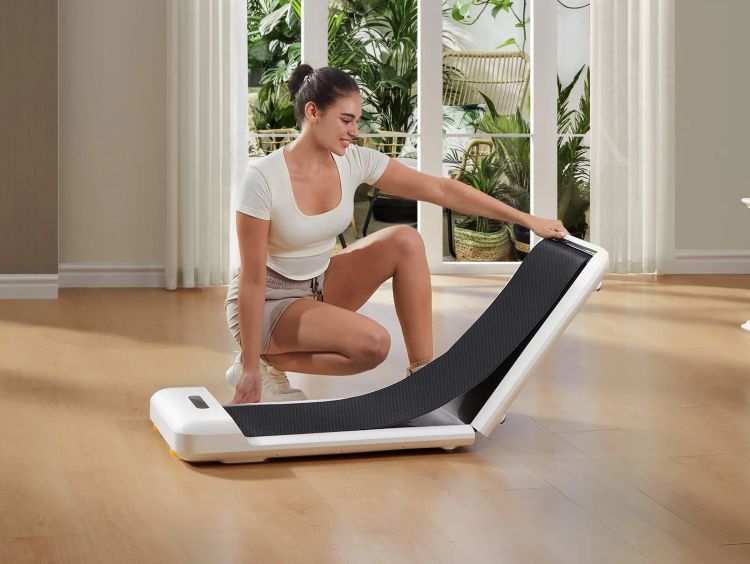
If you have spent any time on TikTok or Instagram in the last few years, you have probably seen it: someone casually walking on a slim, folding treadmill while working at their desk, scrolling their phone, or watching TV. That product is WalkingPad — and it has become so popular that the brand name is now practically synonymous with the entire “walking pad” category.
But viral popularity does not always mean a product is actually good. So we dug into expert reviews, real user feedback, and detailed product breakdowns to answer the question everyone is asking in 2026: is WalkingPad actually worth it?
What Is WalkingPad?
A walking pad is exactly what it sounds like — a pad that you walk on. Walking pads are similar to treadmills, but they generally do not go as fast as a typical treadmill, do not have as many settings, and usually do not allow for adding incline to your walk.
What makes them different from a standard treadmill is their design: walking pads are usually easier to store, often folding in half to be stashed under a couch or bed, or wheeled into a closet — making them perfect for apartment living and small spaces.
WalkingPad is now synonymous with under-desk treadmills, having essentially defined and popularized this entire product category. Whether you are walking during a midday work call, getting steps in while watching TV, or taking a stroll while listening to an audiobook, WalkingPad has built a lineup designed to fit seamlessly into everyday life.
WalkingPad Lineup at a Glance (2026)
| Model | Price | Top Speed | Best For |
|---|---|---|---|
| WalkingPad R2 Walk&Run 2-in-1 | $899 | 3+ mph (with handrail for running) | Walking + light jogging |
| WalkingPad A1 Pro | ~$400–$500 | ~3.7 mph | Best overall under-desk treadmill |
| WalkingPad C2 | ~$450–$550 | ~3.7 mph | Taller users, wider belt |
| WalkingPad X21 Double-Fold | ~$600–$700 | Higher speed for jogging | Users who want to jog occasionally |
WalkingPad R2 Walk&Run 2-in-1 — The Run-Friendly Option
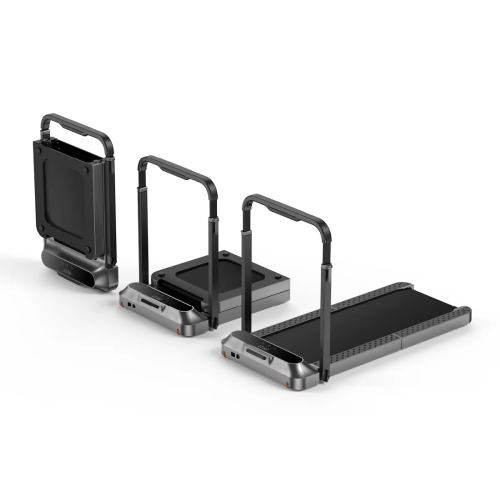
The R2 is WalkingPad’s higher-end option, designed for users who want more than just a casual walking pace. It features a higher speed capacity with an adjustable handrail you can put up if you want your pace to exceed three miles per hour — making it the most versatile option for people who want to alternate between walking and light jogging.
Real User Experience
One reviewer who tested the R2 daily described it as surprisingly unobtrusive for a literal treadmill — it emits a hum that gets louder while running, but neighbors below did not notice it even with increased mileage.
In terms of portability, the reviewer noted the convenience of its rolling capability, though the wheels were frustratingly small — meaning while you will not want to move it long distances often, you can fold it up and roll it behind a sofa or appliance, which is a major win for small spaces.
One important caveat: the unit’s weight makes it manageable with a partner, an elevator, or if you already lift heavy — but it would be a real challenge to carry up several flights of stairs alone.
Pros ✅
- 2-in-1 design — walk and light jog
- Adjustable handrail for higher speeds
- Surprisingly quiet operation
- Foldable and rollable for storage
Cons ⚠️
- Premium price at $899
- Small wheels make moving it awkward
- Heavy — difficult to carry up stairs solo
WalkingPad A1 Pro — Best Overall Under-Desk Treadmill
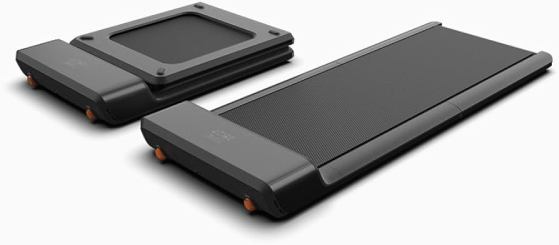
The A1 Pro is widely considered one of WalkingPad’s best options, combining a sleek design with genuinely useful smart features. One of the standout features that makes the A1 Pro stand out from competitors is its manual and automatic speed adjustment — in automatic mode, the treadmill uses your positioning on the belt to speed up or slow down automatically, adjusting to your natural pace without you needing to touch any controls.
Real User Experience
Reviewers who have used the A1 Pro long-term in office settings praise its lightweight, space-saving design, noting it does not take up much room and can be moved around without too much trouble.
One Thing to Know
The folding design does require you to stoop slightly when moving the unit, and some users note the unfolding process can be loud — with the belt occasionally sticking and making a sound similar to tape being ripped, or thudding to the floor if the deck is not supported properly during unfolding. This is a minor adjustment, but worth knowing before your first use.
Pros ✅
- Best-in-class automatic speed adjustment
- Sleek, modern design
- Lightweight and easy to move
- Great value for the features offered
Cons ⚠️
- Loud unfolding process
- Requires stooping to move/unfold
WalkingPad C2 — Best for Taller Users
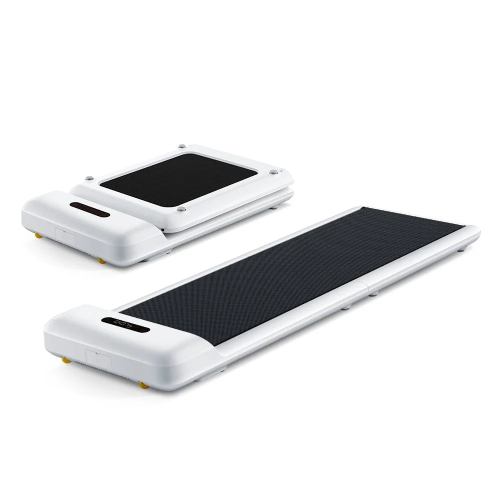
If you have a larger frame or find narrow treadmill belts uncomfortable, the WalkingPad C2 is specifically recommended for taller users who need more room on the belt. Reviewers comparing multiple walking pads note that while budget options often have narrower belts that can cause tripping for taller users, models like the WalkingPad A1 Pro or C2 solve this issue with a wider walking surface.
Pros ✅
- Wider belt — more comfortable for taller users
- Solid build quality
- Folding design for storage
Cons ⚠️
- Higher price point than entry-level walking pads
- Heavier than ultra-budget options
WalkingPad X21 Double-Fold Treadmill — For Light Jogging
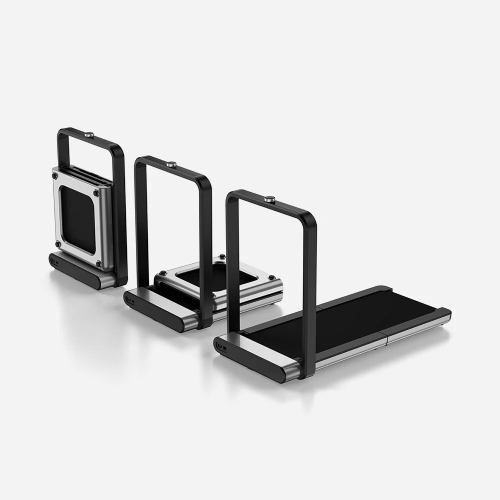
If your goal is to occasionally pick up the pace beyond a walk, the X21 is designed with this in mind — offering a higher speed range and double-fold design for even more compact storage when not in use.
How Fast Does WalkingPad Actually Go?
This is one of the most important things to understand before buying. While entry-level WalkingPad models are often listed as reaching up to 4 mph, real-world testing reveals an important nuance: one tester noted that the 4 mph on these machines does not feel like a standard 4 mph on a gym treadmill — though it goes plenty fast for general walking purposes.
The takeaway: if your goal is to increase your daily step count while working, watching TV, or taking calls, WalkingPad models deliver exactly what you need. If you are looking for a machine for serious cardio training or fast-paced running, you will want a higher-speed model like the R2, or a traditional treadmill.
Size, Storage & Weight Capacity
One of WalkingPad’s biggest selling points is how well it fits into small spaces:
- Entry models measure around 56 inches long by 21.5 inches wide when unfolded
- The folding mechanism cuts the length down to roughly 32.5 inches, making it easy to stow under beds, in closets, or anywhere out of the way
- Portability ratings from professional reviewers land around 4.5 out of 5 for ease of moving and folding
Weight Capacity
Entry-level models typically have a 220-pound weight capacity. While this number might concern some larger users, real-world testing found that a 220-pound user was able to use the machine without significant issues — though those near or above this limit should consider higher-capacity models like the R2 or C2.
Is the Motor Powerful Enough for Daily Use?
A common question is whether WalkingPad motors (often around 1 horsepower on entry models) can handle daily, long-term use. While some reviewers have expressed doubt about whether a 1 horsepower engine is strong enough for continuous daily use, customer reviewers report using their WalkingPad every day with no issues — with one long-term user reporting daily use for 1.5 years during colder months with no problems and feeling they had “definitely gotten their money’s worth.”
WalkingPad vs Other Walking Pad Brands
| WalkingPad | Budget Brands (Urevo, Bluefin) | WellFit | |
|---|---|---|---|
| Brand Recognition | ⭐⭐⭐⭐⭐ (Category-defining) | ⭐⭐⭐ | ⭐⭐⭐ |
| Build Quality | ⭐⭐⭐⭐⭐ | ⭐⭐⭐⭐ | ⭐⭐⭐⭐ |
| Smart Features | ⭐⭐⭐⭐⭐ (Auto speed adjustment) | ⭐⭐⭐ | ⭐⭐⭐ |
| Price | $$$ | $ | $$ |
| Display | Yes (most models) | Varies | Sometimes none |
WalkingPad is now synonymous with the under-desk treadmill category — meaning competitors are often judged against it as the benchmark, even when offering more affordable alternatives.
Who Is WalkingPad Best For?
WalkingPad is ideal for:
- Remote workers who want to stay active during calls, emails, and meetings
- Apartment dwellers who need a treadmill that genuinely disappears when not in use
- Anyone trying to hit a daily step goal without dedicating time to a separate workout
- Light joggers — especially with the R2 or X21 models
- People who tried bulky home treadmills before and found them too space-consuming or intimidating
Who Might Want to Look Elsewhere
- Serious runners needing high speeds and incline options
- Users over 220 lbs who do not opt for higher-capacity models
- Anyone needing a treadmill for intense daily cardio training
WalkingPad: Pros & Cons Summary
Pros ✅
- Category-defining brand — set the standard for walking pads
- Genuinely space-saving with effective folding design
- Smart automatic speed adjustment (A1 Pro)
- Quiet enough for apartment living
- Strong daily-use durability reported by long-term users
- Range of models for different needs (walking, jogging, taller users)
Cons ⚠️
- Premium pricing compared to budget alternatives
- Top speeds feel slower than advertised on entry models
- Some models have loud unfolding mechanisms
- Weight capacity may be limiting for larger users on base models
Final Verdict: Is WalkingPad Worth It in 2026?
Yes — for its core purpose, WalkingPad remains one of the best options on the market.
If your goal is to move more during the workday, increase your step count, and reclaim sedentary hours without sacrificing productivity, WalkingPad delivers a genuinely useful, well-designed product backed by real long-term user satisfaction. The brand’s reputation as the category leader is well-earned — from the smart automatic adjustments on the A1 Pro to the versatility of the run-friendly R2.
The sedentary lifestyle is one of the biggest silent hazards of modern remote work — and a WalkingPad is one of the most effective tools to fight back against it without giving up your productivity.
Start walking your way to better health — one step at a time. 🚶♀️
Frequently Asked Questions (FAQ)
What is the difference between a WalkingPad and a regular treadmill?
Walking pads are generally slower, more compact, and lack features like incline — but they fold flat for easy storage, making them ideal for small spaces and casual daily walking rather than intense workouts.
Can I run on a WalkingPad?
Entry-level models are designed primarily for walking, but models like the WalkingPad R2 and X21 include adjustable handrails and higher speed capacities specifically for light jogging.
Is WalkingPad good for daily use?
Yes — multiple long-term users report daily use over extended periods (a year or more) without issues, describing it as a worthwhile investment for their routine.
How loud is a WalkingPad?
Most models emit a quiet hum during use, with some noting it gets slightly louder during faster walking or running. Some models can be louder during the unfolding/folding process.
What is the weight limit for WalkingPad treadmills?
Entry-level models typically have a 220-pound weight capacity, while higher-end models like the C2 and R2 are built to accommodate larger users.
Which WalkingPad model is best for beginners?
The WalkingPad A1 Pro is often recommended as the best overall option, thanks to its automatic speed adjustment and ease of use for first-time walking pad owners.
Disclosure: This post contains affiliate links. If you make a purchase through our links, we may earn a small commission at no extra cost to you. This helps support our site and allows us to keep creating honest, helpful content for you.