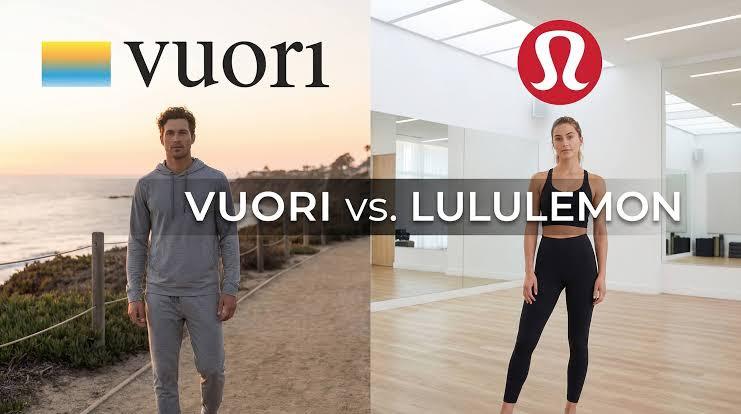
Vuori and Lululemon are the two names that dominate every “best athleisure brand” conversation right now, and if you’re trying to decide where to spend your money, you’re not alone. Both brands sit in the premium activewear bracket, both have cult followings, and both promise the same thing: clothes that work as hard in the gym as they do at brunch.
But the two brands are built on very different philosophies, fabric technologies, and price structures. This guide breaks down exactly how Vuori and Lululemon compare, so you can decide which one actually deserves a spot in your closet.
Vuori vs Lululemon: Quick Comparison
| Category | Vuori | Lululemon |
|---|---|---|
| Founded | 2015, Encinitas, California | 1998, Vancouver, Canada |
| Core focus | Men’s-first, coastal athleisure-performance hybrid | Women’s-first, technical yoga & training wear |
| Signature fabrics | DreamKnit™, BlissBlend™, Strato Tech, BreathInterlock™ | Nulu™, Luon, Luxtreme, Everlux, Ultralu |
| Price range (leggings/joggers) | $78–$128 | $88–$128 |
| Best known for | Soft, brushed-jersey, dual-purpose gym-to-street pieces | Compressive, technical, studio-to-street leggings |
| Return policy | Free returns under “Investment in Happiness” guarantee | Free returns within policy window |
| Store footprint | ~40 U.S. stores + UK flagship | Global, hundreds of stores worldwide |
Brand Origins: A Different Starting Point
Vuori was founded by Joe Kudla in 2015 in Encinitas, California, and launched with a focus on men’s activewear sold primarily direct-to-consumer, drawing on a mix of fitness, surf, and coastal-California culture. The brand has since expanded rapidly, with a $825 million funding round valuing the company at over $5 billion, and it now operates roughly 40 stores across major U.S. markets plus international flagships in cities like London.
Lululemon has a much longer history, founded in Vancouver, Canada in 1998 and built its early reputation around the yoga studio crowd. It grew into a global athleisure giant with hundreds of stores worldwide, and its fabric R&D — dating back to the original Luon fabric trademarked in 2005 — has become industry-defining.
The key takeaway: Vuori is the newer, faster-growing challenger with a men’s-first heritage, while Lululemon is the established, women’s-led category leader with two and a half decades of fabric development behind it.
Fabric Technology: How the Two Brands Really Differ
This is where the comparison gets interesting, because fabric feel is the single biggest reason shoppers pick one brand over the other.
Vuori’s Fabric Lineup
- DreamKnit™ — A lightweight, brushed jersey with four-way stretch, built with a high percentage of recycled fabric. This is the material behind Vuori’s joggers and wide-leg pants, and it leans soft and casual rather than compressive.
- BlissBlend™ — An ultra-soft fabric with 360-degree stretch, designed for a light, airy, “customized to your body” feel in leggings.
- BreathInterlock™ — A peachy-soft, moisture-wicking, quick-drying fabric used in Vuori’s bestselling Daily Legging.
- Strato Tech — The brand’s signature performance knit for tees and polos, moisture-wicking with UPF 30+ sun protection.
Lululemon’s Fabric Lineup
- Nulu™ — The fabric behind the iconic Align legging, designed for a “second-skin,” buttery-soft feel. Best suited to low-impact activity like yoga, Pilates, or everyday wear, though it can pill with heavy use.
- Luon — Lululemon’s original 2005 fabric, a thicker, more cotton-like knit with light-to-medium compression; largely phased out of leggings but still found in jackets and trousers.
- Luxtreme — A slicker, more athletic nylon/lycra blend built for sweatier, higher-intensity sessions, though some wearers find it slides during workouts.
- Everlux — A hybrid fabric with a cool, slick interior and a brushed, cottony exterior, released to bridge the gap between Lululemon’s softer and more technical materials.
- Ultralu — A reengineered, thicker knit offering serious compression, generally better suited to everyday wear than intense training.
The bottom line on fabric: Vuori’s textiles are generally softer, more brushed, and more casual-leaning across the board — closer to loungewear that happens to perform well. Lululemon’s fabric library is more segmented by activity level, with dedicated options for yoga (Nulu), high-intensity training (Luxtreme, Ultralu), and everything in between. If you want one do-it-all soft fabric, Vuori’s approach is simpler. If you want a fabric matched precisely to your workout type, Lululemon gives you more granular choice.
Price Comparison
Both brands sit in the premium tier, and the price gap is smaller than most people expect.
- Leggings: Vuori’s Daily Legging runs around $98, similar to Lululemon’s Align leggings, which typically range from $98–$118 depending on length and cut.
- Joggers/pants: Vuori’s Ponto Performance Pant and Meta Pant land between $110–$138, closely matching Lululemon’s Wunder Train and Groove pant pricing.
- Tees: Vuori’s Strato Tech Tee at $58 tends to undercut comparable Lululemon technical tees, which often start closer to $68–$78.
- Shorts: Vuori’s Kore Shorts ($68–$98) are broadly in line with Lululemon’s training shorts.
Verdict on price: Lululemon and Vuori are close enough in pricing that cost alone shouldn’t be your deciding factor — fabric feel and use case matter more.
Fit and Design Philosophy
Lululemon’s Align line is engineered around a “naked sensation” — minimal seams, a snug, body-hugging fit, and a v-seam back designed specifically for shape and support during low-impact movement like yoga and Pilates. It’s not built for high-intensity training, and reviewers note it can show wear over time with heavier use.
Vuori’s design philosophy leans toward versatility over specialization. Rather than offering a highly specific fabric for each activity type, pieces like the Kore Short and Daily Legging are designed to move between the gym, errands, and travel without a wardrobe change. Vuori’s men’s assortment is also considerably deeper than Lululemon’s, reflecting the brand’s men’s-first origins.
Which Brand Is Better For Men?
This is one of the clearest differentiators. Vuori launched as a men’s-focused brand and still maintains one of the strongest men’s activewear catalogs in the premium space, with dedicated fabric lines like Strato Tech and the Kore Short built specifically around men’s training needs. Lululemon’s men’s line has grown substantially but is still generally considered secondary to its women’s assortment in terms of variety and cultural cachet.
If you’re shopping for men’s activewear, Vuori is the stronger starting point.
Which Brand Is Better For Women?
Lululemon’s decades of fabric R&D and its dominant position in the yoga and studio space give it an edge for women specifically seeking technical, activity-matched performance wear — particularly for yoga, Pilates, and studio training. Vuori’s women’s line, built around DreamKnit™ and BlissBlend™, leans softer and more casual, which appeals more to shoppers who want one legging that works for errands, travel, and light workouts alike.
If you want highly technical, activity-specific performance leggings, Lululemon has the deeper bench. If you want soft, versatile, everyday-to-gym pieces, Vuori is the better fit.
Sustainability and Values
Vuori requires Tier 1 manufacturing vendors to sign a Vendor Code of Conduct covering labor standards and environmental practices, and several of its fabrics — including DreamKnit™ — use a high percentage of recycled material. Lululemon has its own sustainability commitments and supply chain standards as a larger, more established global company, though the two brands communicate their sustainability efforts differently given their difference in scale.
Final Verdict: Vuori vs Lululemon
There’s no universal winner here — the right choice depends on what you actually need:
- Choose Vuori if: You want soft, versatile, gym-to-street pieces, you’re shopping for men’s activewear, or you prefer a newer brand with a coastal-casual aesthetic.
- Choose Lululemon if: You want technical, activity-matched fabrics, you’re focused on yoga or studio training, or you value decades of fabric R&D and a more established size range.
Many shoppers end up owning pieces from both brands — Vuori for everyday comfort and travel, Lululemon for dedicated studio or training sessions.
Frequently Asked Questions
Is Vuori cheaper than Lululemon? Not significantly. Core pieces like leggings and joggers are priced similarly across both brands, though Vuori’s basic tees tend to be slightly less expensive than Lululemon’s comparable technical tees.
Which brand’s leggings last longer? This varies by fabric and use case. Lululemon’s Nulu-based Align leggings are known to pill with heavy or high-intensity use, while Vuori’s BreathInterlock™ and BlissBlend™ fabrics are generally reported as durable for both light workouts and daily wear, though individual experience can vary.
Is Vuori or Lululemon better for yoga? Lululemon’s Align line, built specifically around a “naked sensation” and minimal-seam design for low-impact movement, is generally considered the more purpose-built option for yoga and Pilates.
Does Vuori have as many stores as Lululemon? No. Vuori operates around 40 stores primarily in major U.S. cities plus a UK presence, while Lululemon has a much larger global store footprint reflecting its longer history and larger scale.
Which brand has a better men’s collection? Vuori, due to its men’s-first brand origins and dedicated fabric lines like Strato Tech and the Kore Short.
Can I return items to either brand if the fit isn’t right? Yes. Both brands offer return policies for eligible items — Vuori under its “Investment in Happiness” guarantee — though exclusions can apply, so check each brand’s current policy before purchasing.
Still deciding? Check out our full Vuori review for a deeper look at the brand’s best sellers and fabric technology.