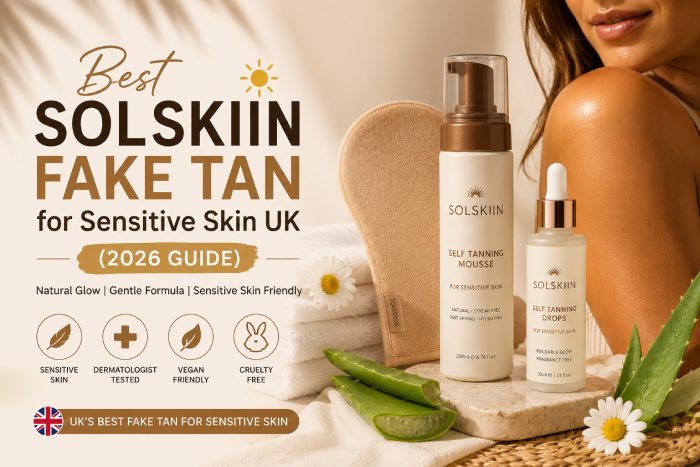
If you’ve ever come out in red blotches, itchy patches, or a rash after using a self-tan, you’re not alone. Thousands of people across the UK deal with reactive, eczema-prone, or easily irritated skin — and most fake tans on the market simply weren’t built with that in mind. The good news is that with the right formula and the right routine, a natural, sensitive-skin-friendly glow is completely achievable, without the redness or the biscuit smell.
This guide breaks down exactly what to look for in a fake tan for sensitive skin, which ingredients to avoid, and how to apply it for a streak-free finish that lasts.
Why Sensitive Skin Reacts to Most Fake Tans
Most high-street self-tanning products rely on a high concentration of DHA (dihydroxyacetone) combined with alcohol-based carriers, synthetic fragrance, and parabens to speed up drying time and boost colour depth. For normal skin, this isn’t usually a problem. But for sensitive, reactive, or condition-prone skin (think eczema, rosacea, or general redness), these ingredients can trigger:
- Tightness and dryness within hours of application
- Redness or a burning sensation, especially on the face and chest
- Small breakouts or clogged pores from heavy, pore-blocking formulas
- An uneven, patchy fade as the skin barrier struggles to hold colour evenly
The fix isn’t to avoid tanning altogether — it’s to switch to a formula built specifically around skin health rather than just colour.
What to Look for in a Sensitive-Skin-Friendly Fake Tan
When you’re shopping for a tan that won’t upset reactive skin, run through this checklist:
1. Dermatologically tested formulas. Look for products that have been specifically tested on sensitive skin types, not just standard formulas with a “gentle” label slapped on.
2. Skincare-grade hydrating ingredients. Ingredients like Hyaluronic Acid, Aloe Vera, and Papaya Extract hydrate and soothe while the tan develops, rather than stripping moisture the way alcohol-heavy formulas do.
3. No parabens or sulfates. These common preservatives and foaming agents are frequent irritants for reactive skin.
4. Vegan and cruelty-free formulation. This often correlates with cleaner, less synthetic ingredient lists overall.
5. Buildable, low-to-medium DHA concentration. A gradual approach lets your skin adjust without an overwhelming chemical load in one go.
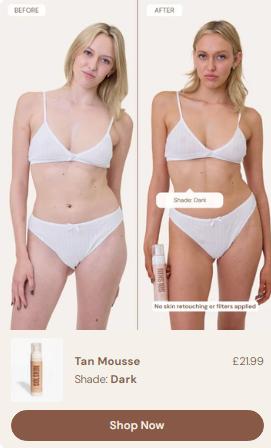
SOLSKIN’s range was built entirely around this checklist — every formula is dermatologically tested, vegan, cruelty-free, and free from parabens and sulfates, with hydrating actives like Aloe Vera, Hyaluronic Acid, and Papaya Extract doing double duty as both tan and skincare.
The Best Application Routine for Sensitive Skin
Even the best formula needs the right routine behind it. Here’s how to get an even, long-lasting glow without triggering a reaction:
- Exfoliate gently 24 hours before tanning. Skip the harsh scrubs — a soft exfoliating mitt or glove removes dead skin without inflaming the surface.
- Moisturise dry areas only. Knees, elbows, and ankles can take a light layer of moisturiser about an hour before application to prevent the tan from clinging and going patchy.
- Patch test first. Especially if you’re trying a new brand, apply a small amount to your inner arm and wait 24 hours before going all in.
- Build gradually. A gradual tanning moisturiser or tan drops mixed into your regular moisturiser lets you control depth of colour day by day, which is far kinder to reactive skin than one intense mousse application.
- Avoid tight clothing and sweating for the first 6-8 hours. This gives the tan time to develop evenly without rubbing off in patches.
Gradual Tan vs. Tan Mousse: Which Is Better for Sensitive Skin?
Both have their place, but they suit slightly different needs:
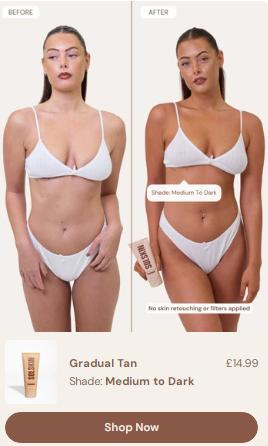
- Gradual tanning moisturiser is the gentlest entry point. It’s applied daily like a normal body lotion, builds colour slowly, and is the easiest option for very reactive skin types.
- Tan mousse delivers a deeper, more immediate colour and works well once your skin has been introduced to a formula and tolerates it comfortably. It’s best for special occasions when you want a defined glow fast.
- Tan drops offer a middle ground — a few drops mixed into your usual moisturiser let you customise depth without switching products entirely.
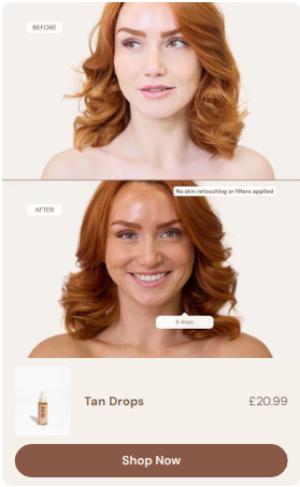
For most sensitive-skin beginners, starting with a gradual tan and working up to drops or mousse for events is the safest route.
Common Myths About Fake Tan and Sensitive Skin
“Natural tans are always safer.” Not necessarily — “natural” isn’t a regulated term, and some naturally-derived ingredients can still irritate. What matters is whether a formula is dermatologically tested and free from known irritants like parabens and sulfates.
“If it smells nice, it won’t irritate.” Fragrance, even a pleasant one, is one of the most common triggers for reactive skin. Look for formulas that mask the classic self-tan smell using skin-friendly ingredients rather than synthetic perfume.
“Sensitive skin can’t get a deep tan.” With the right buildable formula, sensitive skin can absolutely achieve a rich, even colour — it just needs to be built in layers rather than applied all at once.
Frequently Asked Questions
What is the best fake tan for sensitive skin in the UK? Look for a dermatologically tested, vegan, paraben-free formula with hydrating ingredients like Aloe Vera and Hyaluronic Acid. SOLSKIN’s range is formulated specifically for sensitive skin and is one of the UK’s top-rated options on Trustpilot.
Can eczema-prone skin use self-tan? Yes, as long as the formula is free from common irritants like alcohol, parabens, and synthetic fragrance, and is applied to skin that isn’t actively flaring. Always patch test first.
Why does my fake tan go patchy on sensitive skin? Patchiness is usually caused by uneven exfoliation, dry patches on knees and elbows, or a formula that isn’t absorbing evenly due to skin dryness. Gentle exfoliation and light moisturising beforehand solves most of this.
How long does a gradual tan last? Gradual tans typically build over 3-5 days of daily application and fade naturally over the following week, similar to how skin naturally sheds.
Is vegan fake tan better for sensitive skin? Vegan formulas often avoid animal-derived and heavily synthetic ingredients, which can mean a cleaner ingredient list overall — but always check for dermatological testing specifically, as “vegan” alone doesn’t guarantee it’s suitable for reactive skin.
Final Thoughts
Sensitive skin doesn’t mean you have to give up on a golden glow. The key is choosing a formula built around skin health first — dermatologically tested, hydrating, and free from the common irritants that cause redness and patchiness — and applying it with a routine that respects your skin barrier. Get that combination right, and a natural, even tan is well within reach, whatever the weather’s doing outside.